
It's 6:40 on a Tuesday. A homeowner in your service area is standing in a garage watching water spread across the floor. She searches, finds you, and calls.
What happens next decides whether she becomes your customer. And in most home service businesses, the owner has never actually checked.
Business hours are tomorrow.
Where the lead goes
Here is the honest map of an after-hours lead, as we see it when we walk into a business.
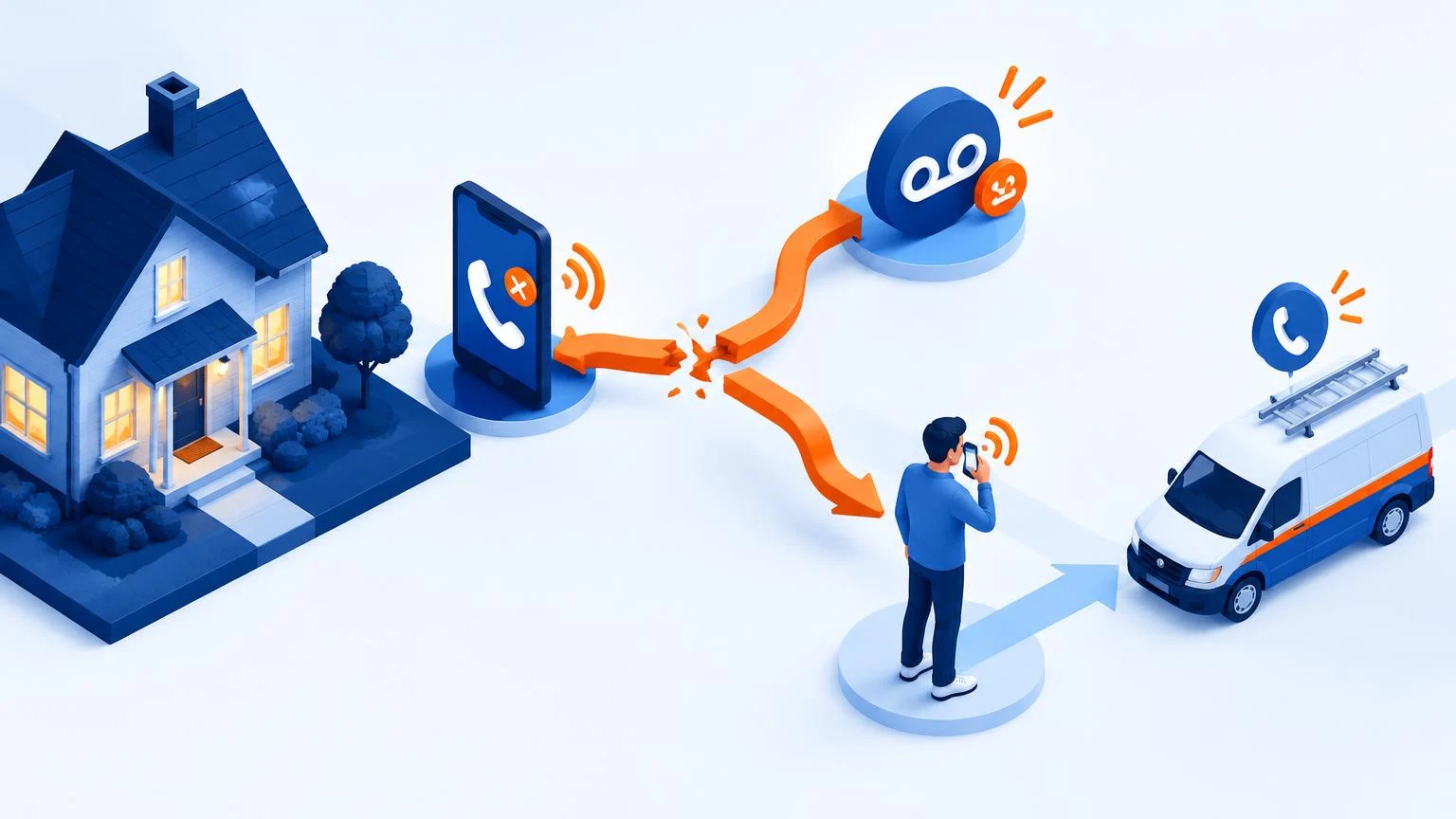
The after-hours lead path
Where a 6:40 PM call actually goes
She calls
Water on the garage floor.
It rings out
Nobody is holding the phone.
Old voicemail
“We’ll call you during business hours.”
Next listing
Whoever answers gets the job.
No record
No message, no lead, no report.
It rings to a phone nobody is holding. The office line forwards to a desk, or to a cell in a jacket pocket, or to nothing. After four or five rings it drops to voicemail.
She hears a greeting recorded two years ago. It asks her to leave a message and promises a callback during business hours. She is standing in water. Business hours are tomorrow.
She hangs up and calls the next listing. Most callers do not leave a message. They are not being rude. They have a problem, and voicemail is not a solution to it. The next company that picks up, or texts back within a minute, gets the job.
Your system never records it. This is the part that hurts. Because she didn't leave a message, there is no missed-call report, no lead in the CRM, no note. When you look at last month's numbers, that call does not exist. You can lose a dozen of these a week and your dashboard will tell you everything is fine.
Why owners don't see it
A missed after-hours call is invisible in three ways at once.
It is invisible to your reports, because nothing was logged. It is invisible to your team, because nobody was there. And it is invisible to you, because you were doing exactly what you should be doing at 6:40 PM: having dinner with your family, or finishing a job, or finally sitting down.
So the only evidence is the one thing owners rarely look at: what a stranger experiences when they call your number tonight.
The five-minute test
Before you buy anything or change anything, run this once. It takes five minutes and it tells you more than any report.
Tonight, after your office closes, call your own main number from a phone that isn't in your system. Don't tell the team.
Count the rings. Note what you hear: a person, a voicemail greeting, a menu, or nothing.
Leave a realistic message. “My water heater is leaking into the garage, can someone call me back?” Use a name your team won’t recognize.
Fill out the contact form on your website with the same problem. Send a text to your main number if it accepts texts.
Start a timer. Write down how long it takes for a real person to respond to each one. If nothing comes back by morning, write “never.” Then compare your times with the speed-to-lead benchmarks.
Most owners who run this test are surprised. That surprise is the point. You cannot fix what you cannot see, and this is the fastest way to see it.
What “fixed” looks like
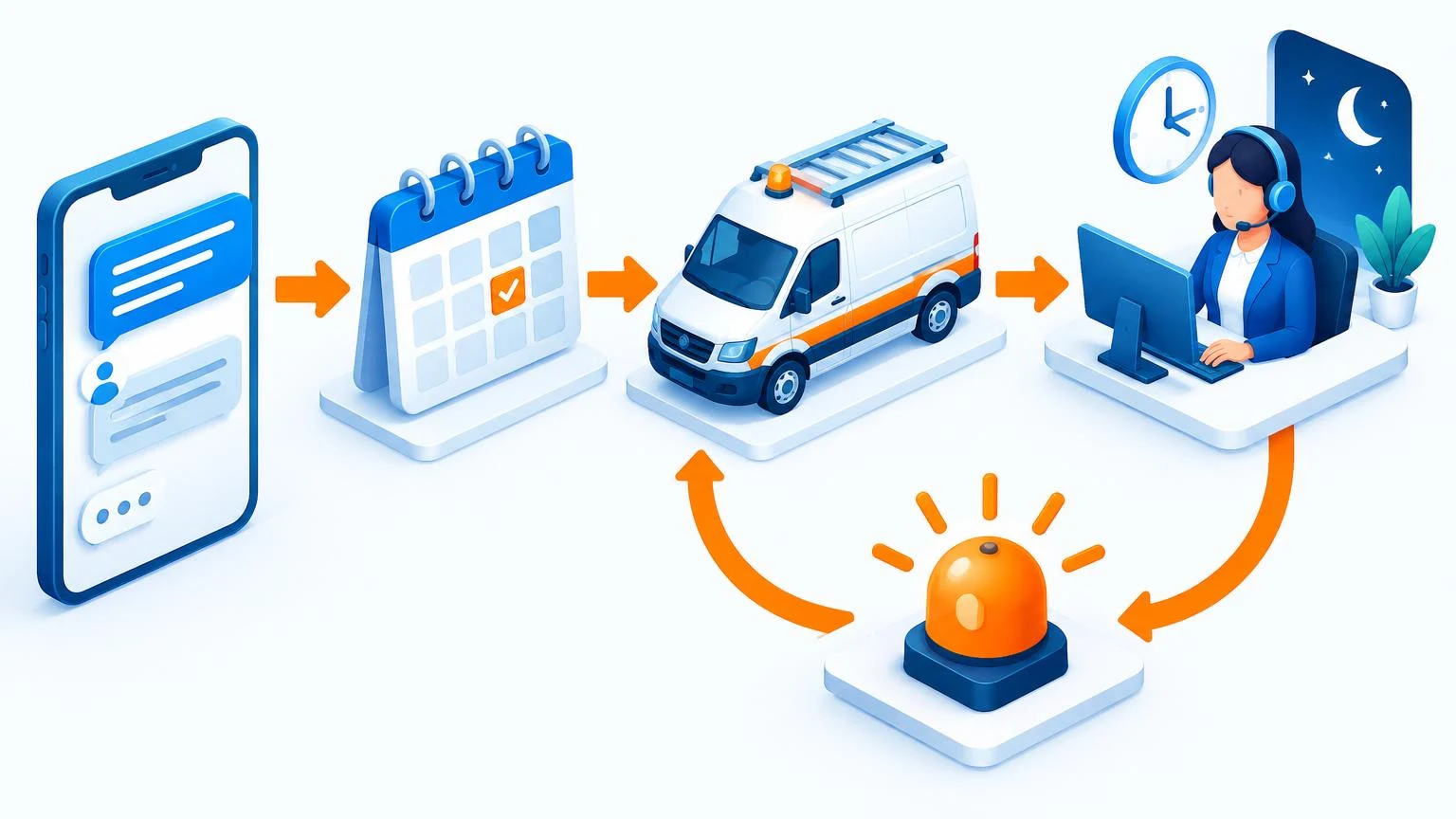
Fixed is not “we have an answering service.” Plenty of businesses pay for one and still lose the lead, because the service takes a message and the message sits until morning. Fixed is a standard: every call, text and form gets a real response quickly, after hours included, and ends in a booked appointment or a clear next step.
There are three levels of keeping that promise, and the right one depends on how much after-hours work is worth to you.
The rotation. One named person owns the line each evening. Calls forward to their phone. They have a short script and the booking calendar open. This costs nothing and it is the floor. It fails when the owner is the whole rotation.
The relay. Calls still go to a person, but a backup catches what they miss: an automatic text-back the moment a call goes unanswered, with a link to book or a promise of a callback in a set time. This stops the silent losses.
The after-hours front desk. A trained answering layer, whether a service or an AI receptionist, picks up when the office is closed, follows your script, books into your calendar, and escalates true emergencies to the on-call tech. The rotation becomes the backup instead of the front line. This is where businesses with real after-hours revenue usually end up.
Three levels of coverage
Pick the level your after-hours work is worth
Level 1
The rotation
One named person owns the line each evening, with a short script and the booking calendar open.
Costs nothing. The floor.
Level 2
The relay
A person still answers, plus an automatic text-back the moment a call is missed.
Stops the silent losses.
Level 3
After-hours front desk
A trained answering layer picks up, follows your script, books, and escalates emergencies.
The rotation becomes the backup.
What to say when you call back
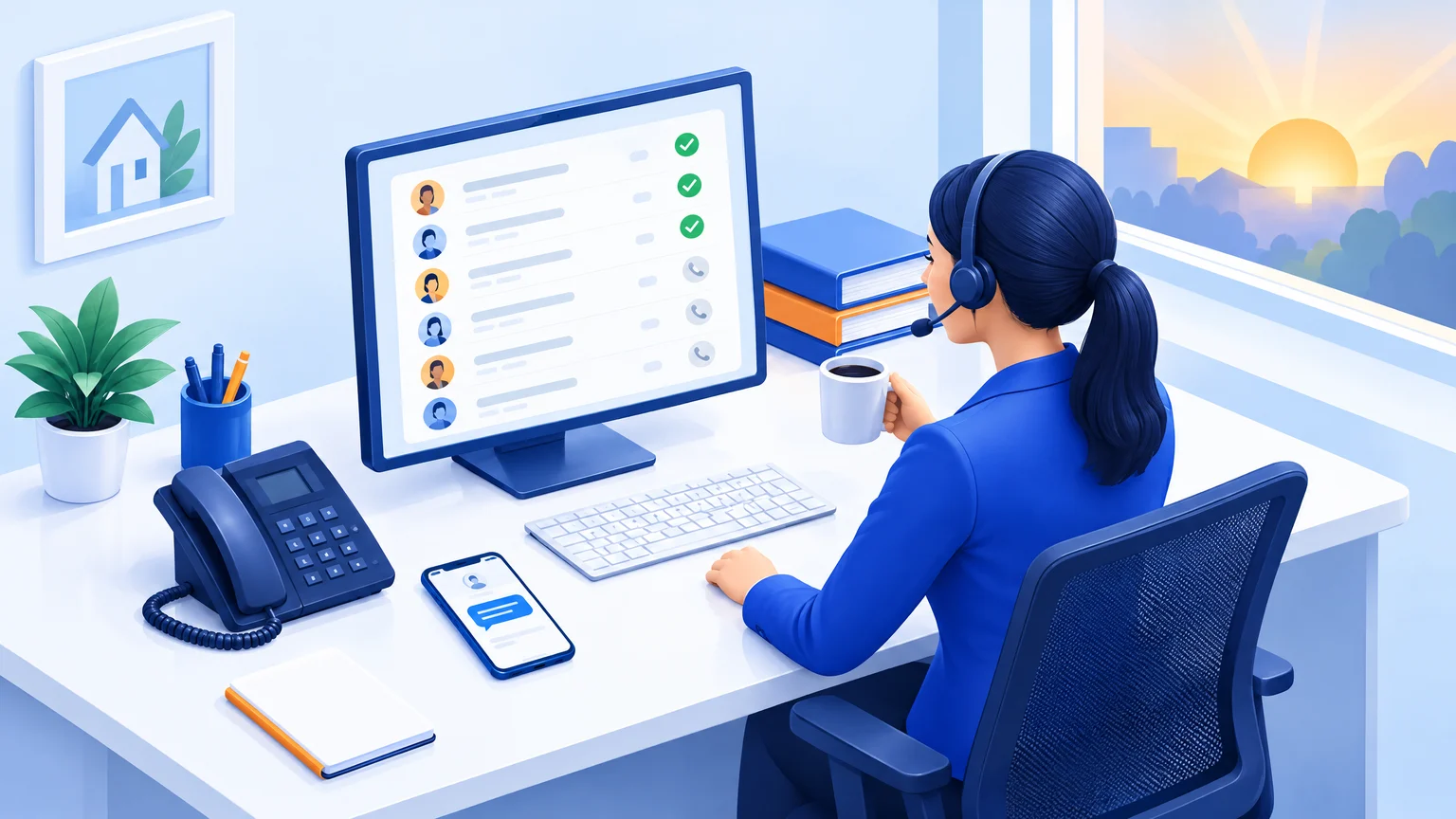
Even with a good setup, some leads will wait until morning. How you call them back decides whether they are still yours.
Call before you text, and call early. The homeowner who called at 6:40 last night may have already booked someone. If they haven’t, being first in the morning still counts.
Open with their problem, not your company: “Hi, this is Dana from the office. You called last night about water in the garage. Is it still leaking, or did it stop?” Then sort it the same way you would on a live call: emergency, can wait, or not a fit. Offer two specific times. Confirm by text before you hang up.
If you use an automatic text-back for missed calls, keep it short and honest: “Sorry we missed your call. Reply here with what’s going on and we’ll get back to you by [time].” Only promise a time you will actually keep.
How to know it’s working
Once something is in place, check three numbers every week:
After-hours calls that reached a person or got a text-back, out of all after-hours calls.
Time to first response on evening and weekend forms and texts.
After-hours leads that ended with a booking or a clear next step.
Then repeat the five-minute test once a month. Systems drift. The forwarding gets changed, the greeting gets old, the person on rotation goes on vacation. The test catches it before your customers do.
The bigger pattern
The after-hours call is one leak. It is usually the first one we find, because it is the easiest to see once you look. But it belongs to a larger pattern: a business that spends real money generating demand and then loses a share of it in the gap between “lead exists” and “job booked.”
Capture is the first stage of that gap. Speed is the second. Follow-up, conversion and reactivation come after. Most businesses are leaking in more than one, and the owner is almost never looking at the one that costs the most.
If you want to see where yours is leaking, the Revenue Diagnostic takes a few minutes and shows you. If you only want to fix tonight's problem, run the five-minute test. Either way, start by looking. And if you want the full picture first, watch the free training.
The Revenue Engine
After-hours capture sits in the middle of the engine.
Generate Demand
Get found and chosen.
Capture & Convert
Answer, follow up, book.
This article
Track & Optimize
Measure booked jobs, not clicks.
Want to see where your business is leaking? The Revenue Diagnostic takes a few minutes and shows you which part of your revenue engine is weakest right now.
For the bigger picture, read why revenue leaks between leads and booked jobs. Continue with The Holiday Rush: How Service Businesses Capture It Instead of Missing It and Slow Follow-Up Is the Most Expensive Habit in Home Services.
Request a Fit Call to review whether a Revenue Engine fits your business.